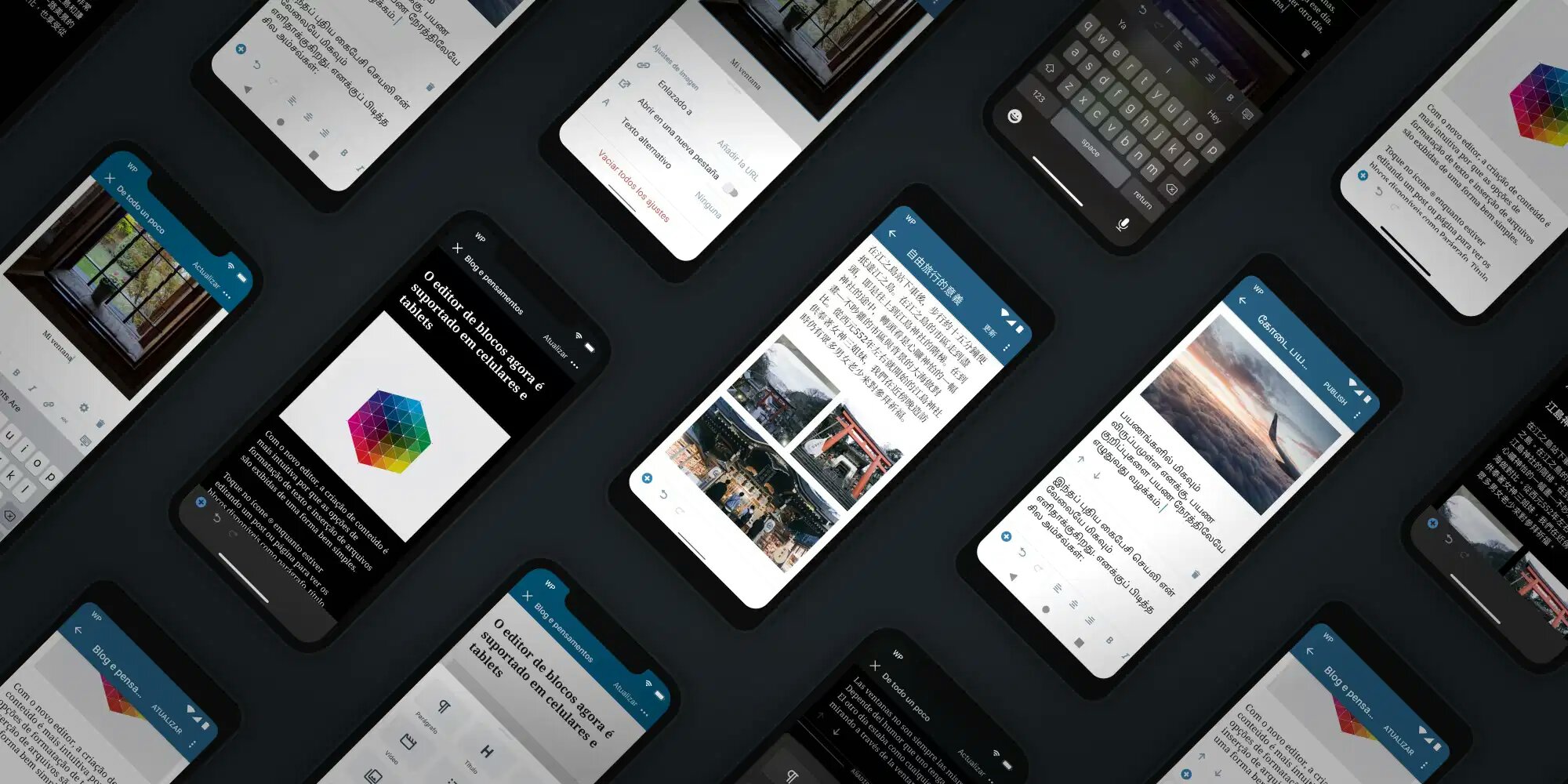
The Block Editor is Now Supported on the WordPress Native Apps

The block editor allows for a smoother drafting experience – now possible on any screen size.

Part of what helps WordPress power 35% of the web is language: WordPress is fully translated into 68 languages. Pair that with the WordPress native apps, which make WordPress available across devices, and you have a globally accessible tool.

Today we’re announcing app updates that bring the new Block editor to mobile devices, so on-the-go publishing is even easier for that 35%.

At Automattic, we speak 88 different languages, so we thought: why not use some of them to tell you about the editor updates? Instead of a few screenshots and bullet points, here are some of the people who build the editor and apps sharing their favorite tools and tricks for the mobile Block editor. To make it more accessible, we’ve also included English translations.

(And for those who want more detail — yes, there are still screenshots and bullet points!)

Rafael, Brazilian Portuguese

Com o novo editor, a criação de conteúdo é mais intuitiva por que as opções de formatação de texto e inserção de arquivos são exibidas de uma forma bem simples.

Toque no ícone ⊕ enquanto estiver editando um post ou página para ver os blocos disponíveis como Parágrafo, Título, Imagem, Vídeo, Lista, Galeria, Mídia e texto, Espaçador e muitos outros.

Translation

With the new editor, creating content is more intuitive because the options to format text and add media are displayed in a simple way. Tap on the ⊕ icon when editing whether a post or page to see all the available blocks like Paragraph, Heading, Image, Video, List, Gallery, Media & Text, Spacer and more.

Anitaa, Tamil

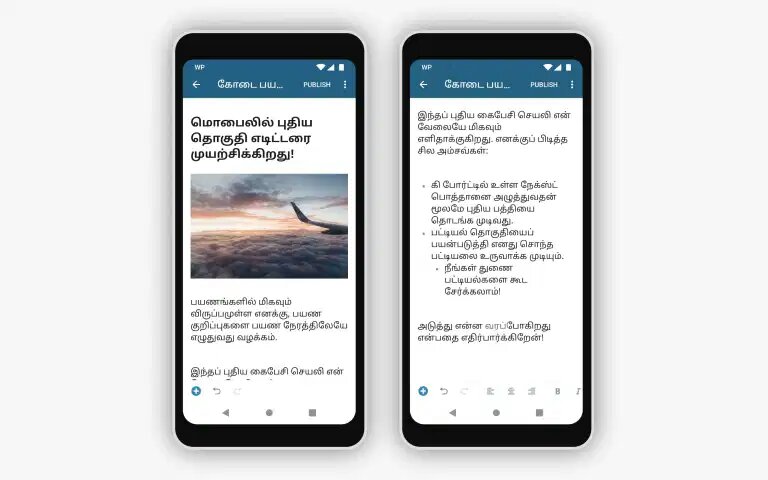
பயணங்களில் மிகவும் விருப்பமுள்ள எனக்கு, பயண குறிப்புகளை பயண நேரத்திலேயே எழுதுவது வழக்கம். இந்தப் புதிய கைபேசி செயலி என் வேலையே மிகவும் எளிதாக்குகிறது. எனக்குப் பிடித்த சில அம்சவ்கள்:

கி போர்ட்டில் உள்ள நேக்ஸ்ட் பொத்தானை அழுத்துவதன் மூலமே புதிய பத்தியை தொடங்க முடிவது.
பட்டியல் தொகுதியைப் பயன்படுத்தி எனது சொந்த பட்டியலை உருவாக்க முடியும்.
பட்டியலின் உள்ளெ பட்டியலை சரிபார்க்கும், அல்லது, துணை பட்டியலை உள்ளடக்கும் பட்டியல் பத்தியை ஆவலுடன் எதிர்பார்க்கிறேன். எனவே அடுத்த புதுப்பிப்பைப் பற்றி நான் மகிழ்ச்சியடைகிறேன்.

Translation

I love travelling and I spend a lot of time on my blog writing travel tips while on the go. My favorite features in the Block editor include:

Creating a new paragraph block by pressing the RETURN button on the keypad.
Adding a List block to create my own lists.
You can even add sub-lists!
I look forward to seeing what’s coming next!
Mario, Spanish

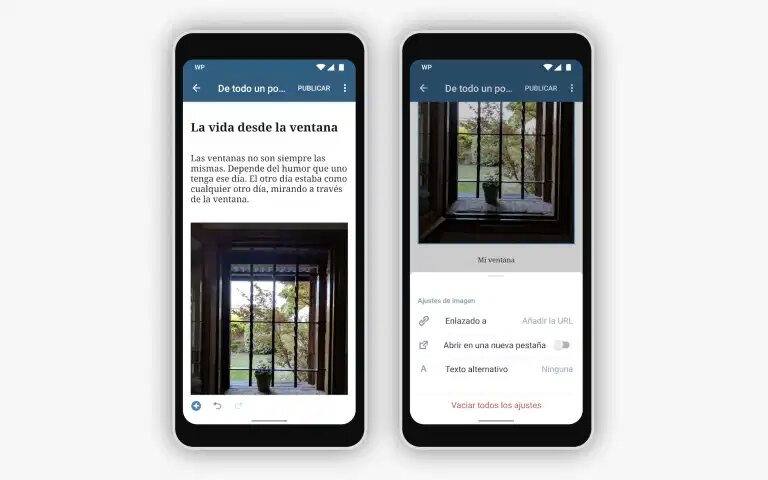
Cuando escribo, doy mil vueltas sobre qué palabras utilizar y me cuesta decidirme. Uso mi móvil porque me da la posibilidad de capturar mis ideas justo en el momento que se me ocurren. Es por eso que de las cosas que más me gustan del Editor es que puedo moverme de un bloque de texto a otro con facilidad y también cambiarlos de lugar. Además, se puede hacer/deshacer muy fácilmente, y siempre se mantiene el historial de edición lo que me da mayor seguridad a la hora de cambiar incluso sólo pequeñas partes del contenido que voy escribiendo.

Translation

When I write, I walk around in circles and can never decide which words to use. So I use my mobile phone, which lets me capture ideas right when they occur to me. That’s why the things I appreciate in the new Editor are the abilities to move from block to block with ease and to change their order and since you can undo/redo quite easily and can see your editing history, I have confidence when I change even small bits of the post I’m writing.
Jaclyn, Chinese

用過 Gutenberg 古騰堡後網誌效率高很多!因為寫旅行文章,很多時候是在旅途中或是平日空擋等候時間紀錄和寫下想法,行動 app 讓我隨時隨地都可以編輯文章。行動古騰堡簡化了移動文章段落重新排序的步驟,讓文章的架構變得很清楚,也更容易管理。

Translation

The new block editor truly makes a difference in my blogging efficiency and experience. Since my blog is about traveling, I often scribble notes and thoughts during my trips. The block editor on mobile simplifies the process of moving paragraphs around and organizing content, so the architecture of the post becomes clearer and easier to reorganize.

To start using the block editor on your app, make sure to update to the latest version, and then opt in to using it! To opt in, navigate to My Site → Settings and toggle on Use Block Editor.

We hope you give the latest release a try; tell us about your favorite part of the mobile block editor once you’ve had a chance to try it.

We’d also love to know your thoughts on the general writing flow and on some of the newer blocks like video, list, and quote blocks. For specific feedback, you can reach out to us from within the app by going to Me → Help and Support, then selecting Contact Us.
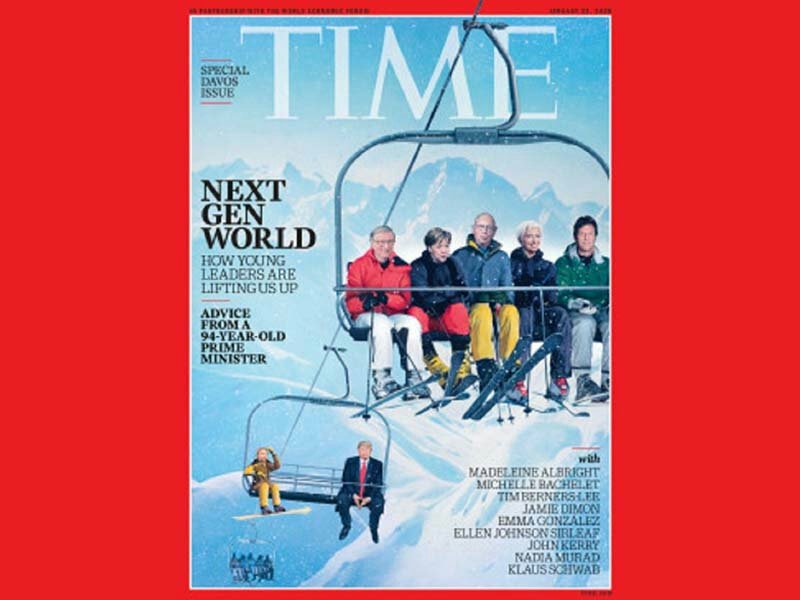
PM Imran featured on Time Magazine cover among other world leaders

The illustration shows the country’s premier on chairlift with Swiss Alps in the background

Prime Minister Imran Khan on Monday was on Time Magazine’s cover along with four other world leaders for the publication’s World Economic Forum (WEF) edition.

WEF founder Klaus Schwab, German Chancellor Angela Merkel, Microsoft founder Bill Gates, and Europe’s Central Bank President Christine Lagarde were all in a chairlift with PM Imran with the Swiss Alps in the background.

The annual summit is set to commence in Davos tomorrow for four days.

PM Imran to meet US President Trump during Davos summit: FO

While US President Donald Trump and climate activist Greta Thunberg can also be seen sitting together on another chairlift in the illustration.

PM Imran will also attend the summit from January 21-23 with the entire trip costing $68,000 to the national exchequer.

PM Imran’s advisers Abdul Razak Dawood and Zulfi Bukhari, as well as, other officials will accompany him to Davos, where he is expected to hold meetings with several world leaders, including US President Trump.

Fifty-three heads of state are on the guest list, including Trump, who is expected to address the gathering on January 21.

The country’s premier will brush shoulders with foreign investors and inform them of investment opportunities Pakistan holds.

This year marks the 50th anniversary of the invitation-only event, which takes place in the Alpine resort town of Davos, amid tight security.

Nearly 3,000 participants from 118 countries are expected to attend the event.

Court directs govt to avail ‘appropriate remedy’ regarding Nawaz’s health reports

awaz is not fit to return as he is still unwell, says PML-N supremo’s counsel

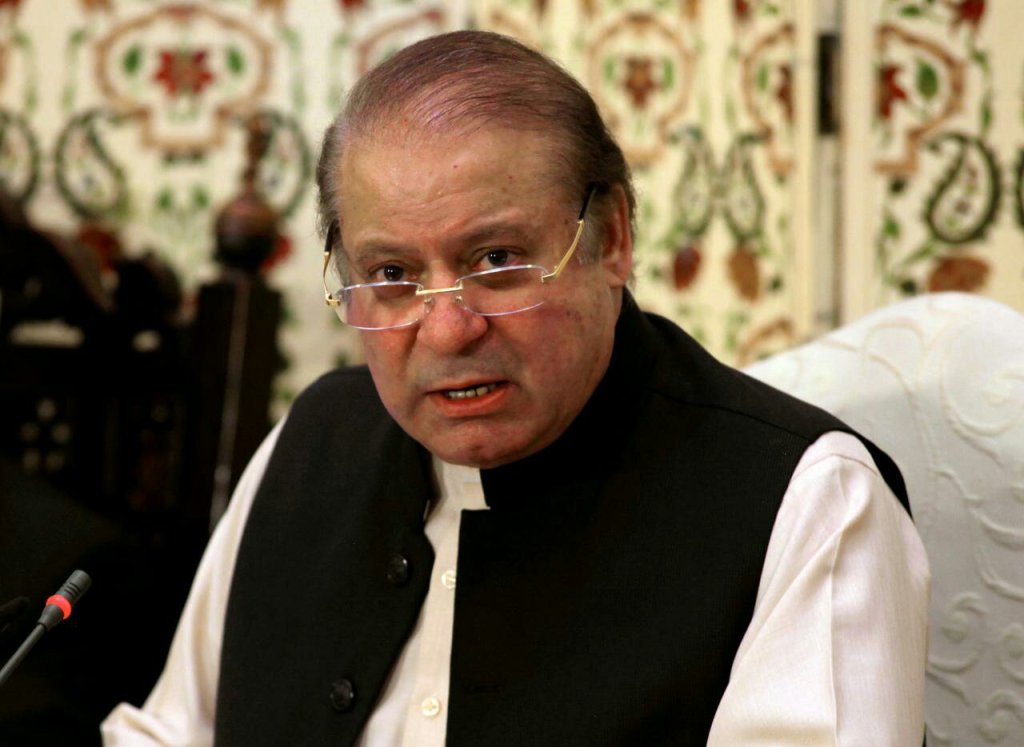
LAHORE: A Lahore High Court (LHC) division bench on Monday directed the federal government to avail ‘appropriate remedy’ after examining the medical reports of former prime minister Nawaz Sharif.

Justice Tariq Abbasi presided the hearing on a petition filed by Pakistan Muslim League-Nawaz (PML-N) President Shehbaz Sharif against the condition of the indemnity bond imposed by the federal government on the removal of Nawaz Sharif’s name from Exit Control List (ECL).

“You should have filed a civil miscellaneous application for the return of Nawaz Sharif,” Justice Tariq Abbasi told the petitioner’s counsels.

To this, they implored to the bench that medical reports had been submitted and they indicate that Nawaz is not fit to return to Pakistan as he is still unwell.

Additional Attorney General Ishtiaq A Khan pleaded to the court that the bail granted to the former premier had lapsed and Nawaz should have returned to apply for an extension.

Justice Mushtaq Ahmed inquired from the counsels whether Nawaz would return from London. To this Justice Abbasi light-heartedly remarked that “some others are making an effort to go abroad”.

A day earlier, the Punjab government had rejected the medical report of the former prime minister, claiming it was prepared by a private UK doctor instead of his general physician in London.

According to the information obtained by The Express Tribune, the medical report sent by the private doctor lacks details about Nawaz’s treatment with regard to his blood platelet count.

Nawaz, who is serving a seven-year jail term, was granted bail and later allowed to go abroad particularly for the treatment of the ailment responsible for the constant drop in his platelet count.

In November, the former PM’s personal physician Dr Adnan Khan had set alarm bells ringing, saying that Nawaz’s condition was serious as his platelets had dropped to a critically low level.

Sources claim that Nawaz has sent medical reports prepared by a doctor who didn’t even conduct his check-up in London.

According to rules in the UK, the medical summary includes data of a patient’s complete check-up issued by the same doctor who the patient has been seeing on a regular basis as well as the medical history of the patient.

‘Artificial’ flour crisis will be over by Monday: Khusro Bakhtiar

Sindh accuses federal government of passing the buck to hide its ‘incompetence

ISLAMABAD / KARACHI : Facing seething criticism for flour prices shooting up to unprecedented levels across the country, the federal government on Sunday insisted that there was no shortage of wheat reserves in the country and pinned the blame on the Sindh government for the existing “artificial crisis”.

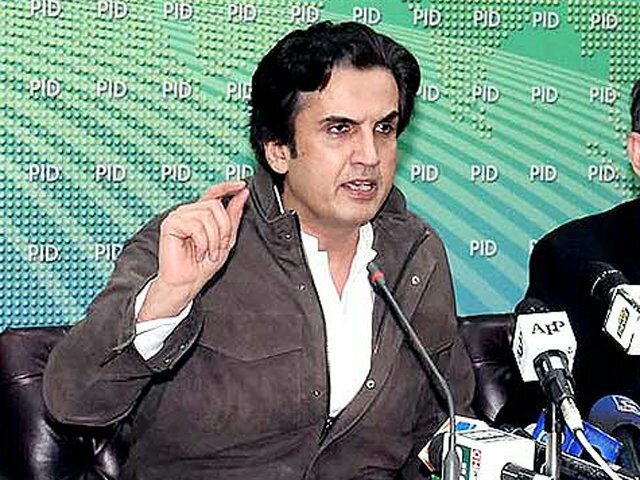
“The government has four million tonnes of wheat in its stock. The disturbance in the supply chain is responsible for this artificial crisis,” National Food Security and Research Minister Khusro Bakhtiar said at a news conference. “The [flour] crisis will be over by tomorrow [Monday] when flour mills will open,” he added.

Despite the minister’s claim, Prime Minister Imran Khan has approved the import of 300,000 tonnes of wheat, drawing the ire of the opposition parties, which are seeking answers for the “unexpected fall in reserves” and demanding an inquiry into the matter.

In response to the allegations, Sindh Information Minister Saeed Ghani has accused the Centre of playing a “dirty blame game”, pointing out that people were lined up in queues for flour in Lahore, Peshawar and Quetta as well.

Bakhtiar maintained that the Sindh government’s failure to timely lift wheat from the Pakistan Agricultural Storage and Services Corporation (Passco) had caused the artificial crisis in the province. However, he conceded that recent goods transporters’ strike was also to blame for the delay.

Bakhtiar pointed out that the Sindh government had failed to procure “even a single grain of wheat” this year even though its target was set at 700,000 tonnes.

“The Khyber-Pakhtunkhwa government was receiving 2,000 tonnes of wheat every day while Sindh was lifting only 150 tonnes,” he added.

The minister said the Centre had approved 400,000 tonnes of wheat for Sindh, particularly for Karachi and Hyderabad, but the province had only lifted around 100,000 tonnes.

“The Sindh government has been provided with 9,000 tonnes of wheat today for Karachi only. It will be handed over 10,000 more tonnes tomorrow,” he said adding that the Passco would provide up to 100,000 more tonnes to the province if required.

The minister said wheat supply to the KP-government had also been increased. “By the end of the season, we will have 850,000 tonnes of wheat in stock for next year.”

Earlier in the day, Special Assistant to the PM on Information and Broadcasting Dr Firdous Ashiq Awan also dismissed the wheat crisis as “negative propaganda”.

“The prime minister had approved the supply of 400,000 tonnes of wheat to Sindh but the PPP-led government only acquired 100,000 tonnes. It failure to supply wheat to flour mills has caused the price hike,” she told the media in Sialkot.

“Of the total output of country’s wheat, 60% is produced and stocked in Punjab,” she said. “Punjab is supplying around 23,390 tonnes of wheat to 814 flour mills on a daily basis through 368 selling points and 181 truck stations.”

Addressing a news conference in Karachi, PTI Sindh President Haleem Adil Sheikh said the Centre had provided wheat to Sindh and it was now the provincial government’s responsibility to ensure that it was supplied to the mills and the price hike was brought under control.

“With the additional wheat that the Centre has provide coupled with the Sindh’s own reserves, the province has least one million tonnes of wheat,” he added.

“It is not the prime minister who should be blamed for this crisis. It’s is the negligence and incompetence of the Sindh government.”

Hitting back at the federal government, Sindh Information Minister Ghani blamed the prime minister for the prevailing crisis and demanded that he should apologise to the nation for the wheat shortage.

“The federal government is pinning the blame on us to hide its own incompetence,” he added.

The provincial minister maintained that Punjab’s wheat had been supplied to K-P. “This has been done to deliberately create a shortfall in Punjab,” he claimed. “Is Sindh responsible for the wheat shortage in Punjab too?”

In a statement, Sindh Chief Minister Murad Ali Shah said the crisis in the province would be overcome by Tuesday or Wednesday.

“Passco has given 300,000 tonnes of wheat to Sindh which will be transported from Punjab and Balochistan,” he added.

The chief minister held the strike of the goods transporters responsible for the delay in transporting wheat.

He said 70,000 bags of wheat had reached Karachi on Sunday and 50,000 more bags will be provided by Monday.

Taking to Twitter, PML-N President Shehbaz Sharif fired a broadside at the PTI government or prevailing wheat and flour crisis in the country, demanding an investigation to reveal characters behind the ‘conspiracy’.

“On whose orders and at what price wheat was exported? Where have all the wheat stocks disappeared in 16 months? …the nation needs to know who benefitted at the cost of their loss,” Shehbaz, the opposition leader in the National Assembly, wrote in a series of tweets.

The former Punjab chief minister said “a comedy of infinite stupidity is at display in guise of reforms, benefitting hugely a few opportunists”.

The prices of flour have gone up across the country with the commodity being sold at Rs70 per kg in Lahore, Karachi and other cities.

Alarmed by the sudden surge in prices, the prime minister ordered a countrywide “grand operation” against wheat hoarders and profiteers.

Experts in the Express News show, The Review, made a shocking disclosure that the prices skyrocketed after the government exported 48,000 metric tons of wheat despite a ban on its export.

In the show, the hosts cited statistics of the Pakistan Bureau of Statistics (PBS) on the export of the staple food during the period of Jul-Oct 2019.

The government allowed export of 693,436 metric tons of wheat worth Rs20.2 billion in 14 months starting from Sept 2018 to Oct 2019. The PBS data also shows that out of that, 48,083 metric tons of wheat was exported despite a ban imposed with effect from July 2019.

The Economic Coordination Committee (ECC) of the Cabinet had placed the ban on wheat export on Jul 17, 2019, yet, according to the PBS, from July to October 2019, 48,083 metric tons of wheat was exported and the exporters earned Rs1.82 billion.

Army rescues 22 students stranded for five days in G-B snowfall

Helicopter rescue operation carried out on the directives of General Qamar Javed Bajwa

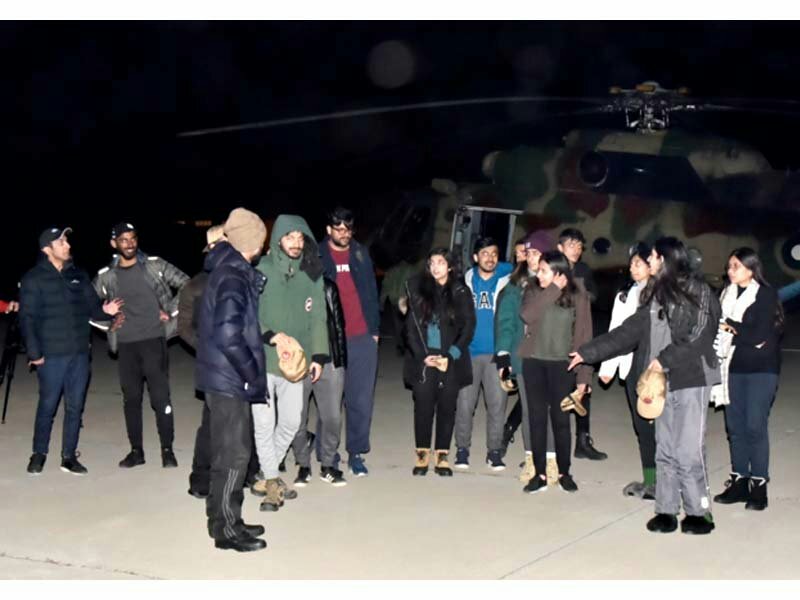
The Pakistan Army rescued 22 students who had been stranded in a snow-hit area of Gilgit-Baltistan (G-B) for the last five days, said a statement issued by the military’s media wing on Monday.

The students – 13 boys and nine girls – of the Lahore University of Management Sciences (LUMS) went to Rattu Ski Resort for skiing but were stuck there due to heavy snowfall and landslides, the Inter-Services Public Relations (ISPR) said.

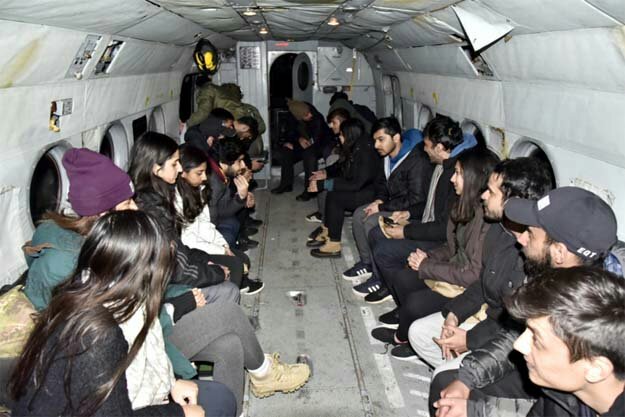
Students being rescued in an army helicopter. PHOTO: ISPR

The rescue operation was carried out on the directives of Chief of Army Staff (COAS) General Qamar Javed Bajwa soon after the LUMS administration approached the army for help.

The students were brought to Rawalpindi in an army helicopter and they are “on the way to their homes”, the ISPR added.

PM Imran to meet US President Trump during Davos summit: FO

Premier will deliver a keynote address at the WEF’s Special Session

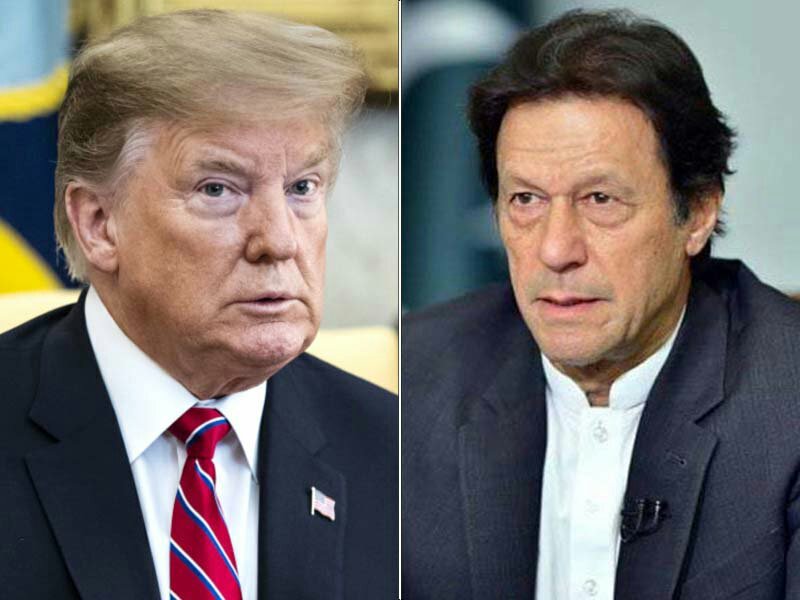
ISLAMABAD: Prime Minister Imran Khan will meet US President Donald Trump on the sidelines of the upcoming World Economic Forum (WEF) in Davos, Switzerland.

This would be the third leadership-level interaction between Pakistan and the US since the premier’s visit to Washington in July 2019.

The premier is also expected to meet other world leaders on the sidelines of the summit, said a statement by the Foreign Office (FO).

This year’s three-day forum will commence on January 21 and the premier is attending at the invitation of Founder and Executive Chairman of WEF Professor Klaus Schwab.

The prime minister will also deliver a keynote address at the WEF’s Special Session and interact with CEOs and other corporate leaders during “Pakistan Strategy Dialogue”.

The FO added that the premier will also speak to senior international media persons and editors during a session with the Forum’s International Media Council. The prime minister will give interviews to major international media outlets.

“Several meetings are also scheduled with a wide range of corporate, business, technology and finance executives, and representatives of international financial institutions,” said the FO statement.

The thematic focus of the session for this year is ‘Stakeholders for a Cohesive and Sustainable World’. This year’s session marks the 50th anniversary of the forum. In keeping with the significance of the milestone, political leaders, business executives, heads of international organisations and civil society representatives will deliberate on contemporary economic, geopolitical, social and environmental issues.

“Throughout his engagements at Davos, the prime minister will share Pakistan’s vision and achievements in the areas of economy, peace & stability, trade, business and investment opportunities. He will also highlight the current situation in the Indian Occupied Jammu & Kashmir and Pakistan’s perspective on key regional and international issues.”

As a further sign of thawing relations between Islamabad and Washington, Trump authorised the resumption of International Military Education and Training (IMET) earlier in January.

In December 2019, the Trump administration has approved the resumption of Pakistan’s participation in a coveted US military training and educational programme more than a year after it was suspended.

The decision to resume Islamabad’s participation in the IMET – for more than a decade a pillar of US-Pakistani military ties – underscores warming relations that have followed meetings this year between President Trump and Prime Minister Imran Khan.

Washington also has credited Islamabad with helping to facilitate negotiations on a US troop withdrawal from Afghanistan. The talks recently resumed between the United States and the Taliban.

#Ehd eWafa teasers tell the tale of true friends

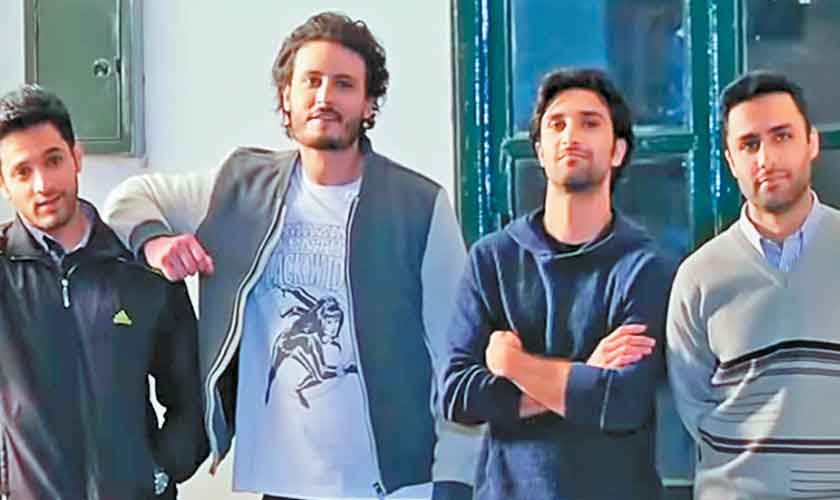
It was last week that Osman Khalid Butt shared a picture of himself along with Ahad Raza Mir, Ahmed Ali Akbar and Wahaj Ali on social media; the four of them could be seen standing outside Lawrence College in uniforms, with the caption “SSG” intriguing all fans. Since then rumors have been doing rounds that classic Pakistani drama Alpha Bravo Charlie is getting a sequel. Recently, the drama serials’ first two teasers were released.

#Ehdewafa

Heavy rain, snowfall: Emergency declared in Balochistan as death toll rises

Heavy rain, snowfall: Emergency declared in Balochistan as death toll rises

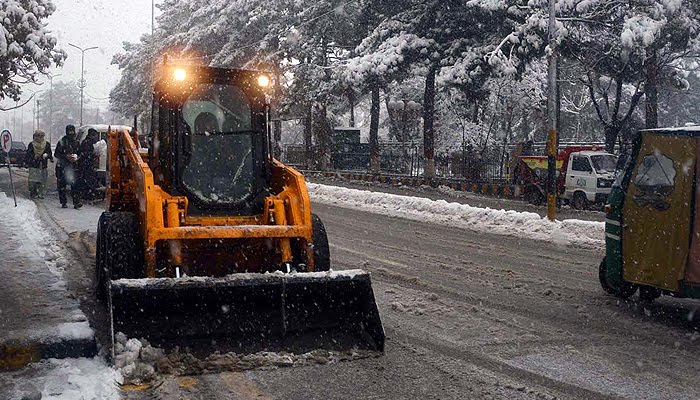
Heavy machinery being used in removing snow on the road to help vehicles for better grip on the snow carpeted road after heavy snow fall in the area. INP

QUETTA: Heavy rain and snowfall brought life to a standstill in seven districts of Balochistan on Sunday as theProvincial Disaster Management Authority (PDMA) declared the imposition of emergency in Mastung, Qila Abdullah, Kech, Ziarat, Harnai, and Pishin districts, reported The News.

Chief Minister Jam Kamal Khan visited the PDMA office and was briefed on the weather situation across the province. “A high alert had been issued to the commissioners and deputy commissioners,” the chief minister told the media after attending the briefing.

Some highways were closed due to heavy snowfall which have been reopened. The Balochistan government is utilising all the resources in view of the snowfall,” The News quoted Kamal as saying.

Meanwhile, at least 10 people, including three women and three children, were killed in separate incidents due to heavy snowfall in Balochistan. As per the details, at least six persons of a family, including women and children, were killed in a roof collapse in the Shahab Zai area on Sunday.

According to the publication, snowfall blocked the highway from Mehtarzai to Zhob where several vehicles were stranded. Director General PDMA said work was underway to open the highway for traffic.

The met office has forecast widespread rain and snowfall in the province.

Write By BTV

Foreign envoys’ IoK visit ‘important’ but US still ‘concerned’ about detentions, restrictions: Alice Wells

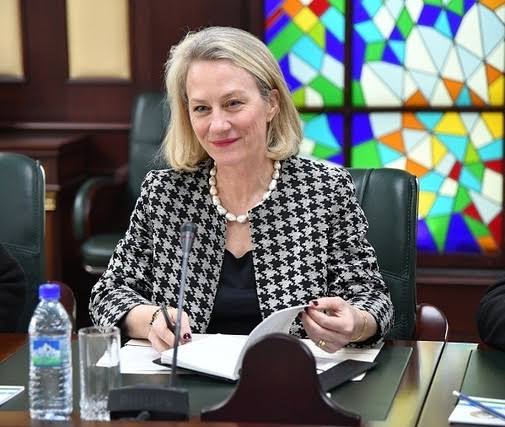
Principal Deputy Assistant Secretary of State for South and Central Asian Affairs Alice Wells. Photo: File

The in-charge of South and Central Asian affairs at the US State Department, Alice Wells, stated on Saturday that Washington was “closely following” the recent trip of foreign diplomats to Indian-occupied Kashmir (IoK) and “remains concerned” regarding the lockdown and restrictions imposed in the valley.

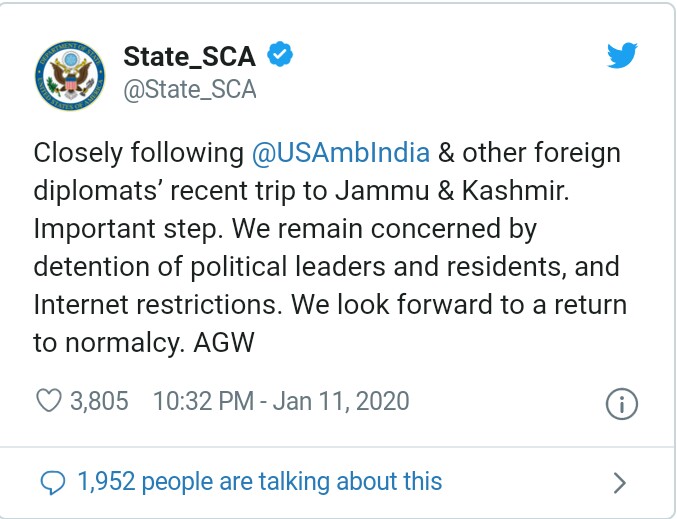
In a message posted on Twitter by the Bureau of South and Central Asian Affairs at the US Department of State, Wells deemed the trip of foreign envoys to the IoK an “important step” but expressed concerns regarding the detention of Kashmiri leaders and residents.

“Closely following US Ambassador to India and other foreign diplomats’ recent trip to Jammu and Kashmir. Important step. We remain concerned by detention of political leaders and residents, and Internet restrictions. We look forward to a return to normalcy,” she wrote on the micro-blogging site.

Wells’ South Asia visit
The statement from Wells comes just a few days before she starts a 10-day visit to the region, during which she will travel to Sri Lanka, India, and Pakistan, from January 13-22.

She is scheduled to arrive in Pakistan on January 19 for a three-day visit, the US state department had previously said.

In Islamabad, she will meet senior Pakistani government officials and members of civil society to discuss issues of bilateral and regional concern. Before arriving in Islamabad, Wells will be in Sri Lanka from January 13-14, during which she will interact with high-ranking officials.

Wells will then travel to India, from January 15-18 to meet senior government officials and to advance the US-India strategic global partnership, according to the US state department.

Wells had last visited Islamabad in August 2019, barely a few days after the Indian government had rushed through a presidential decree to abolish Article 370 of the Indian Constitution that granted special status to Indian occupied Kashmir, formally integrating the valley into India.

Following the revocation, a military curfew and communications blockade had been enforced in the valley and hundreds of thousands of Indian troops deployed to crush dissent. Several political leaders, including two former chief ministers, and thousands others had been arrested.

Indian Supreme Court labels internet ban as ‘unconstitutional’
The Supreme Court of India had ruled on Friday that shutting down internet in occupied Kashmir was unconstitutional in a rebuke for the government to Indian Prime Minister Narendra Modi.

An indefinite suspension of the internet is a violation of the telecoms rules of the country, the court said, ordering authorities in occupied Kashmir to review all curbs within seven days.

Foreign diplomats had visited IoK a day before the top court ruling for the first time since August, but some European nations and others declined to go after being refused permission to travel independently.

The trip included meetings with the army, politicians, civil society groups and journalists selected by the security services, two officials familiar with the plans said.

The diplomats were not given access to Omar Abdullah or Mehbooba Mufti, the leaders of the two political parties, currently under detention, that have historically dominated occupied Kashmir.

Write By BTV

Iran denies reports of police shooting at protesters amid fury over downing of plane

Iran’s police said on Monday officers had not fired at protesters demonstrating over Tehran’s admission that it shot down a passenger plane, as video on social media recorded gunshots and pools of blood.

United States President Donald Trump, while tweeting on Sunday during a second day of Iranian demonstrations, told the authorities “don’t kill your protesters”. The demonstrations at home are the latest development in one of the most destabilising escalations between the US and Iran since the Iranian revolution of 1979.

Tehran has acknowledged shooting down the Ukrainian jetliner in error, killing 176 people, hours after it had fired at US bases to retaliate for the killing of Iran’s most powerful military leader in a drone strike ordered by Trump.

Iranian public anger, rumbling for days as Iran repeatedly denied it was to blame for Wednesday’s plane crash, erupted into protests on Saturday when the military admitted it. Demonstrators turned out again on Sunday.

Videos on social media, posted late on Sunday, recorded gunshots in the vicinity of protests in Tehran’s Azadi Square. Footage showed blood on the ground, wounded being carried and people who seemed to be security personnel running with rifles. Other posts showed riot police hitting protesters with batons as people nearby shouted: “Don’t beat them!”

“Death to the dictator,” footage circulating on social media showed protesters shouting, directing their fury at Supreme Leader Ali Khamenei.

“They are lying that our enemy is America, our enemy is right here,” another group outside a Tehran university chanted.

Reuters could not independently authenticate the footage. But state-affiliated media reported the protests on Saturday and Sunday in Tehran and other cities, without giving such details.

“At protests, police absolutely did not shoot because the capital’s police officers have been given orders to show restraint,” Hossein Rahimi, head of the Tehran police, said in a statement carried by the state broadcaster’s website.

Iran’s latest showdown with the US has come at a precarious time for the authorities in Tehran and their allies across the Middle East, when sanctions imposed by Trump have caused deep harm to the Iranian economy.

Iranian authorities killed hundreds of protesters in November in what appears to have been the bloodiest crackdown on anti-government unrest since the 1979 revolution. In Iraq and Lebanon, governments that include Iran-backed armed groups have also faced months of hostile mass demonstrations.

‘Choked off’

Trump wrote on Twitter late on Sunday that National Security Adviser Robert O’Brien had “suggested today that sanctions and protests have Iran ‘choked off’, will force them to negotiate”.

“Actually, I couldn’t care less if they negotiate. Will be totally up to them but, no nuclear weapons and ‘don’t kill your protesters’,” he wrote, repeating his earlier tweets making similar calls to the Iranian authorities not to open fire.

Trump precipitated the escalation between the United States and Iran in 2018 by pulling out of an agreement between Tehran and world powers under which sanctions were lifted in return for Iran curbing its nuclear programme. He has said the goal is to force Iran to agree to a more stringent pact.

Iran has repeatedly said it will not negotiate as long as US sanctions are in place. It denies seeking nuclear arms.

The latest flare-up began at the end of December when rockets fired at US bases in Iraq killed one American contractor. Washington accused pro-Iran militia and launched airstrikes that killed at least 25 fighters. The militia responded by surrounding the US embassy in Baghdad for two days. Trump then ordered the strike that killed Qassem Soleimani, the Iranian general who led pro-Iran militia across the region.

Iran fired at US bases in Iraq on Wednesday, though no Americans were hurt. The Ukrainian plane, on its way to Kiev and carrying many Iranian dual nationals, crashed hours later.

After days of denying blame for the crash, Commanders of Iran’s Guards, a parallel force set up to protect the Islamic Republic and answering to Khamenei, issued profuse apologies.

Iran’s president called it a “disastrous mistake”. A top Guards commander said he had told the authorities on the same day as the crash that a missile had brought down the plane, raising questions about why Iran had initially denied it.

Canadians held vigils for the victims. Prime Minister Justin Trudeau told one event: “We will not rest until there are answers.”

Canada’s Transportation Safety Board (TSB) said it had obtained visas for two of its investigators to travel to Iran.

Design a site like this with WordPress.com
Get started