“Furthermore, the three have been rewarded for their performances in the National T20 Cup as we remain committed to give value to our domestic cricket by providing opportunities to high-performing players.” Pakistan captain Babar Azam said: “I am happy with the selected squad and want to thank the selection committee for entertaining my request for Mohammad Hafeez and Shoaib Malik. I believe they still have plenty to offer to Pakistan cricket in the shortest format and their experience can be critical to our performances in the upcoming series. “Ahsan, Amad and Haris have recently shown promise and talent, and I think it is the right time to throw them at the deep end to check their ability to perform at an international level. I am sure home crowd and conditions will complement their talent and they will be able to justify their selections.” Squad for T20Is: 1.Babar Azam (captain) (Central Punjab) 2.Ahsan Ali (Sindh) 3.Amad Butt (Balochistan) 4.Haris Rauf (Northern) 5.Iftikhar Ahmed (Khyber Pakhtunkhwa) 6.Imad Wasim (Northern) 7.Khushdil Shah (Khyber Pakhtunkhwa) 8.Mohammad Hafeez (Southern Punjab) 9.Mohammad Hasnain (Sindh) 10.Mohammad Rizwan (wicketkeeper) (Khyber Pakhtunkhwa) 11.Musa Khan (Northern) 12.Shadab Khan (Northern) 13.Shaheen Shah Afridi (Northern) 14.Shoaib Malik (Southern Punjab) 15.Usman Qadir (Central Punjab)
ہور: بنگلا دیش کے خلاف ہوم ٹی 20 سیریز میں پاکستان کی عالمی نمبر 1 پوزیشن بھی داؤ پر لگی ہوئی ہے۔
بنگلا دیش کے خلاف ٹی 20 سیریز قومی ٹیم کی مختصر ترین فارمیٹ میں عالمی رینکنگ کے حوالے سے بھی بہت اہمیت کی حامل ہے۔
پوائنٹس ٹیبل کے تحت پاکستان کو اپنی نمبر ون پوزیشن برقرار رکھنے کے لیے بنگلا دیش کو کلین سوئپ کرنا ضروری ہے کیونکہ پاکستان سے آسٹریلیا صرف ایک پوائنٹ پیچھے ہے، پاکستان کی ایک شکست بھی کینگروز کو نمبر ون بنا سکتی ہے۔ پوائنٹس ٹیبل کے مطابق پاکستان اس وقت 270 پوائنٹس کے ساتھ سرفہرست، آسٹریلیا269 پوائنٹس کے ساتھ دوسرے، جنوبی افریقا 262 پوائنٹس کے ساتھ تیسرے جب کہ بھارت 260 پوائنٹس کے ساتھ چوتھے نمبر پر ہے۔
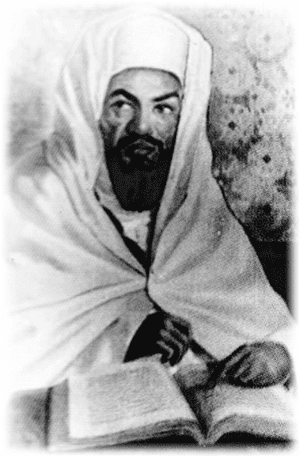
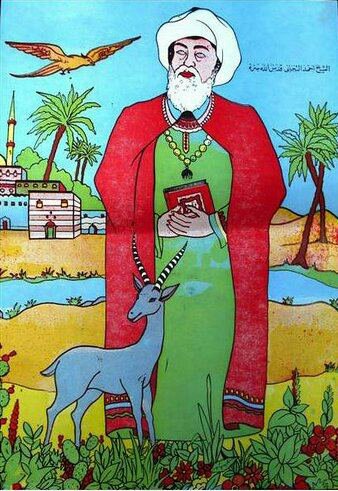
Abu al-ʿAbbâs Ahmad ibn Muhammad at-Tijânî or Ahmed Tijani (1735–1815), in Arabic سيدي أحمد التجاني (Sidi Ahmed Tijani), is the founder of the Tijaniyya Sufi order. He was born into a Berber family in Aïn Madhi in Algeria, and died in Fez, Morocco, at the age of 80.
Tijani was born in 1735 in Ain Madi, the son of Muhammad al-Mukhtar. He traced his descent to a Berber Tribe, Tijania. When he was sixteen, Tijani lost both parents as a result of a plague. By then he was already married. He learned Quran under the tutelage of Mohammed Ba’afiyya in Ain Madi and also studied Khalil ibn Ishaq al-Jundi’s Islamic jusrispudence works that were written under Malikite rites. He also studied Abū al-Qāsim al-Qushayrī’s Risala ila al-sufiyya. In 1757, Tijani left his village for Fez. While there, he joined three Sufi brotherhoods, the Qadiriyya, the Nasiriyya, and the tariqa of Ahmad al-Habib b. Muhammed. In Fez, he met a seer who told him he would achieve spiritual revelation (fath). Thereafter, he left Fez to teach at al-Abiad, spending five years at the village. In 1772, he began a journey to Mecca for hajj and to seek a Sufi way of life. During his journey, he was initiated into the Khalwati order at Azwawi. He later taught for a year at Tunis where he achieved some success. He left Tunis for Egypt where he met Mahmud al-Kurdi of the Khalwati order in Cairo. Tijani reached Mecca in late 1773 and performed hajj rites. In his quest to seek a Sufi way of life, he met Sheikh Ahmad Abdullah El Hindi, who rarely saw people except for his servant. He also met Abd-karim al-Sammman, founder of the Sammaniyya branch of Khalwati. Al-Samman told Tijani he will become a dominant qutb (pole) or scholar within the Sufi orders in the region. Tijani left Mecca and returned to Cairo where he got al-Kurdi’s blessing to preach the Khalwatiyya order. From Cairo he settled at Tlemcen for a couple of years.
Tijani later settled at Sidi Abi Samghun, an oasis seventy five miles south of El Bayadh. It was at Samghun that Tijani received a vision from the prophet who told him to start a new Sufi order. He left his previous affiliations with other Sufi orders and claimed divine instructions from prophet Mohammed. Tijani’s order soon gained attraction in the desert regions surrounding Abi Samghun. Shaykh Tijani lived in Abi Samghun for about fifteen years. In 1796 he went to Fez, marking the real beginning of his Tariqa.
Fez In Fez, Tijani was well received by Mawlay Sulayman, the Moroccan Sultan. Though Sulayman disliked other Sufi orders, he provided Tijani a house and appointed him as a member of his learned council. At first, Tijani chose the mosque of Mawlay Idris to pray but performed the rites of the Tijani order in his house. Tijani later built his own zawiya. In Fez, he sent his trusted aides to spread the word of his order. Trusted aides such as Abu Hafs’ Abdul-Rahman was sent to Oran and Algiers and Abdul-Salam al-Waghiri to Constantine, Algeria. Further muqaddams were appointed among learned converts including Muhammad Fuwadir al-Abdallawi in the Jarid district of Tunisia and Muhammed al-Hafiz in Mauritania.
Tijani assigned to himself the title of Qutb al-Aqtab (or the Pole of the Poles) and Khatm al-Walayya al-Muhammadiyya (or the Seal of Muhammadan Sainthood).
Seal of sainthood
He is quoted as saying
The bounties that flow from the Prophet (peace and blessing be upon him) are received by the natures of the prophets, and everything that flows and emerges from the natures of the Prophets is received by my own nature, and from me it is distributed to all creatures from the origin of the world until the blowing on the trumpet… No saint drinks or provides water to drink, except from our ocean, from the origin of the world until the blowing on the trumpet… ‘The spirit of the Prophet and my spirit are like this’ – pointing with his two fingers, the index finger and the middle finger. ‘His spirit supports the Messengers and the Prophets and my spirit supports the poles, the sages, the saints, from pre-existence to eternity (mina al-azal ila abad)… These two feet of mine are upon the neck of every saint of Allah, from the time of Adam until the blowing of the trumpet… ‘Our station in the Presence of Allah in the Hereafter will not be attained by any of the saints, and it will not be approached by anyone, whether his importance is great or small. Of all the saints among from the very beginning of creation until the blowing on the trumpet, there is not one who will attain to my station.
SHAYKH AHMAD TIJANI AND THE FOUNDING OF THE TARIQA TIJANIYYA
Sidi Abu Abbas Ahmad al-Tijani was born in the Southwest Algerian oasis town of Ain Madi on the twelfth of Safar in the year 1150 (1737 C.E.). He was a descendent of the Prophet Muhammad through Fatima Zahra’s first son Hasan and later through Mawlay Idris, the celebrated founder of Morocco. His father was Sidi Muhammad b. al-Mukhtar b. Ahmad b. Muhammad b. Salam, a prominent scholar whose family hailed from the Moroccan Abda tribe and whose grandfather had immigrated to Ain Madi fleeing a Portuguese invasion less than a century before Shaykh Tijani’s birth. This same ancestor was perhaps one of the more renowned of the Tijani line prior to Shaykh Ahmad Tijani, and it is reported that he used to engage so much in spiritual retreat (khalwa) that he would have to walk to the five prayers in the mosque with his face covered, otherwise onlookers would fall so heedlessly in love with him that they would thereafter never be able to separate from him. Shaykh Tijani’s mother, Aisha, was the daughter of Muhammad b. Sanusi (no known relation to Muhammad al-Sanusi, the founder of the Sanusiyya), and was noted for her piety and generosity.
The young Shaykh Tijani continued in the scholarly tradition of his family and city, memorizing the Qur’an by the age seven before turning to the study of jurisprudence (fiqh and usul al-fiqh), Prophetic traditions (Hadith), explanation of the Qur’an (tafsir), Qur’anic recitation (tajwid), grammar (nahw) and literature (adab), among other branches of the traditional Islamic sciences. According to the Jawahir, the Shaykh mastered all of these fields at a very young age, in part due to the force of his resolve but also because of the quality of his teachers. Among his first instructors were masters of their fields, such as Sidi Mabruk Ibn Ba’afiyya Midawi al-Tijani (not mentioned in the Jawahir as being a relation to Ahmad Tijani), with whom he studied the Mukhtasar of Sidi Khalil, the Risala and the Muqaddama of Ibn Rushd (Averoes) and the Kitab al-‘Ibada of al-Akhdari.
Shaykh Tijani’s prodigious capacity for learning at such an early age is explained in the Jawahir by the Shaykh’s own statemet: “When I begin something, I never turn from it.” In another passage describing his love for the people of religion, the Jawahir describes him as a youth of powerful intelligence, such that nothing escaped his realization. Thus it was that even after he had mastered the sciences available in Ain Madi and had become by the age of twenty, according to the Jawahir, a great scholar, jurist and man of letters such that people were coming to partake of the knowledge of this newest Mufti (a scholar licensed to issue legal decisions), his thirst for more knowledge pushed him to leave the city of his birth in 1171/1758.
The obvious destination for any seeker of Islamic knowledge in the Maghrebi context was Fes, the long-established political, intellectual, cultural and religious capital of the area. According to the Jawahir, the young Shaykh Tijani spent his time in Fes studying Hadith and generally seeking out the people of piety and religion. Among his teachers in Fes were many famous for their knowledge and saintliness. Their names are provided here to demonstrate Shaykh Ahmad Tijani’s contact with some of the more significant luminaries of eighteenth-century Moroccan Sufism. Al-Tayyib b. Muhammad al-Sharif of Wazan (d. 1180/1767), who was head of the Wazzaniyya Sufi order at the time and the student of the famous Shaykh Tuhami descending from the Jazuli shaykh Ahmad al-Sarsari, gave Tijani permission to give spiritual instruction, only to have the young scholar refuse so that he might work harder on himself before becoming a spiritual guide. Sidi Abdullah b. ‘Arabi al-Mada’u (d. 1188) was likewise impressed with his student, telling him that God was guiding him by the hand, and before Tijani left him, the old scholar washed his student with his own hands. Another scholar to predict to Tijani an exalted spiritual attainment was Sidi Ahmad al-Tawash (d. 1204). From Sidi Ahmad al-Yemeni, Shaykh Tijani took the Qadariyya Sufi order, and from Abu Abdullah Sidi Muhammad al-Tizani he took the Nasiriyya order. He also took the order of Abu Abbas Ahmad al-Habib al-Sijilmasy (d. 1165), who came to him in a dream, put his mouth on his, and taught him a secret name. Although Tijani did receive spiritual permission (idhn) in these orders, his association with them should not be considered the essential element in his spiritual development. But the imprint of his early affiliation with these orders was not completely lost with the later development of the Tijaniyya, and their emphasis on an elite “orthodox” Sufism, firmly rooted within the bounds of the Qur’an and Sunna, was an essential component of Shaykh Tijani’s new order, as will be seen later in chapter three.
Even from the time of Shaykh Tijani’s first visit to Fes, the young scholar’s ascendent motivation seemed to be the attainment of a spiritual opening (fath). So when another of his teachers, Sidi Muhammad al-Wanjili (d. 1185), a man known for his saintliness, predicted for him a maqam (spiritual station) of Qutbaniyya(Polehood) similar to that of Abu Hasan al-Shadhili, but that his fathwould come in the desert, Tijani hastened his departure from Fes. The Jawahir reports that he spent some time in the desert Zawiya of the famous Qutb Sidi Abd al-Qadir b. Muhammad al-Abyad (known as Sidi al-Shaykh) before returning to Ain Madi, only to leave his home soon again to return to al-Abyad before moving on to Tlemcen. His activities during this time consisted of teaching Qur’anic exegesis (tafsir) and Hadith in whatever town he happened to be staying while continuing an apparently rigorous practice of asceticism, including frequent fasting and superogatory worship. During his stay in Tlemcen, he received through Divine inspiration greater assurance of his coming grand illumination.
It was from southwest Algeria, then, that Shaykh Ahmad Tijani set out in 1186/1773 to accomplish the requisite Islamic pilgrimage (Hajj). Shaykh Tijani’s first stop of note en-route to Mecca was at Algiers, where he met Sidi Muhammad b. Abd al-Rahman al-Azhary (d. 1793), a prominent muqaddam (spiritual guide) of the Khalwatiyya Sufi order who had received initiation at the hands of Shaykh al-Azhar Muhammad al-Hifni. The Khalwatiyya, originating in fourteenth century Anatolia, had become by the eighteenth century, under the tutelage of Mustafa al-Bakri, one of the most prominent orders in Egypt and a locus for Islamic and Sufi renewal.
Shaykh Tijani’s affiliation with this order was perhaps the most significant influence upon his thought prior to his waking meetings with the Prophet, and he did not leave Algiers before receiving initiation at the hands of al-Azhary. No doubt such an encounter would have provided additional impetus to meet, as he later would, some of the day’s most renowned Khalwati scholars, such as Mahmud al-Kurdi and Muhammad al-Samman, while passing through Egypt and the Hijaz.
Shaykh Ahmad Tijani’s journey East brought him also to Tunis, home of the famous Zaytuna mosque and university, which predates both the Azhar in Cairo and the Qarawin in Fes. Indicative of the ease with which foreign scholars could integrate into diverse Islamic communities, upon his entry into Tunis, Shaykh Tijani immediately met with the people of saintly renown, such as Sidi Abd al-Samad al-Ruhwij, and took up teaching at Zaytuna, this time his syllabus including Ibn ‘Atta Allah’s Kitab al-hikam. It seems he made enough of an impression on the scholars there for the Emir, Bey Ali (r. 1757-1782), to offer him a lucrative permanent teaching position at Zaytuna. But the Emir’s request had the opposite effect on Shaykh Tijani to that which was hoped for and, reportedly not wanting to accept dependence on state authority, he continued his journey East.
Arriving in Mecca just after Ramadan in the year 1187/1774, Shaykh Ahmad Tijani stayed long enough to accomplish the rites of the Hajj. During his stay there he also, as was his custom, sought out the people of “goodness, piety, righteousness and happiness.” His search led him to a mysterious saint from India, Ahmad b. Abdullah al-Hindi, who had made a vow to speak to no one except his servant. On knowledge of Tijani’s presence at his house, al-Hindi sent him the message, “You are the inheritor of my knowledge, secrets, gifts and lights,” and informed the pilgrim that he himself was to die in a matter of days (it came to pass on the exact day al-Hindi had predicted for himself), but that he should go visit the Qutb (Pole) Muhammad al-Samman when in Medina.
After accomplishing the ziyara (visitation) to the Prophet’s tomb, where “God completed his aspiration and longing” to greet the Prophet, Shaykh Tijani went to visit the renowned Shaykh Muhammad Abd al-Karim al-Samman (d. 1189/1775). Like al-Kurdi, al-Samman was a member of the Khalwatiyya order, being one of two students given full ijaza (permission) by Mustafa al-Bakri; the other was al-Kurdi’s shaykh, Muhammad al-Hifni. Aside for his own intellectual and spiritual prowess, al-Samman has become famous on account of another disciple, Ahmad al-Tayyib (d. 1824), who spread his ideas in the Sudan as the Sammaniyya order. Before Shaykh Tijani’s departure, al-Samman informed him of certain secret “names” and told him that he was to be the al-qutb al-jami’ (the comprehensive Pole).
On his return from the Hijaz, Shaykh Tijani stopped in Cairo and visited Mahmud al-Kurdi, the Khalwati representative in Egypt whom he had first visited on his way to the Hijaz. The Jawahirreports that many of the ‘ulama of the city came to visit the travelling scholar during this second visit. Demonstrating his profound respect for his teachers of the Khalwati tradition, Tijani accepted from al-Kurdi to be a muqaddam (propagator) of the Khalwati order in North Africa. Although Tijani’s later initiation at the hands of the Prophet would obviate its need, the Jawahirreproduces the chain of transmission (silsilah) of the Khalwatiyya, stretching from the Prophet through Ali ibn Abi Talib, Hasan al-Basri, Junayd, Umar al-Khalwati (from whom the order derives its name), Bakri, and Kurdi (not to mention all the names) to Shaykh Tijani.
The beginning of a distinctive “Tijani” order can be located with the appearance of the Prophet Muhammad to Shaykh Ahmad Tijani in a waking vision. This occurred in 1784, in the desert oasis of Abi Samghun. The Prophet informed him that he himself was his initiator on the Path and told him to leave the shaykhs he had previously followed. The Shaykh then received the basis of a new wird and was given permission to give “spiritual training to the creation in [both] the general and unlimited (itlaq).” The Prophet told him: “You are not indebted for any favor from the shaykhs of the Path, for I am your means (wasita) and your support in the [spiritual] realization, so leave the entirety of what you have taken from all the tariqas.” Shaykh Ahmad Tijani and a group of his closest companions took up residence in Fes beginning in 1213/1798. By the time of his arrival in Fes, Shaykh Tijani’s fame as a scholar possessing religious charisma or blessing (baraka) had spread throughout the Maghreb, so that his entry into the city was a matter of some importance for the political and religious establishment. The Shaykh was met by a delegation of scholars selected by the Sultan. The relationship that developed between Shaykh Tijani and Sultan Mawlay Sulayman is important in understanding the religious personality of both men. After a series of tests to ascertain the veracity of Tijani’s claims to sainthood, such as giving the saint money in a manner he would not have been able to accept as a man of religion, Mawlay Sulayman became closely linked to the newcomer, appointing him to his council of religious scholars and giving him a large house (“the House of Mirrors”). The Sultan’s initiation into the Tijaniyya has often been denied by non-Tijanis, but Tijanis have maintained his discipleship to their Shaykh. Tijani tradition has chronicled a series of letters between Shaykh Tijani and the Sultan clearly indicating a shaykh-disciple relationship. In one exchange, the Shaykh writes the Sultan urging him to fear God and keep to His command and then informs him of the some of the benefits of the Tijani wird as told him by the Prophet, and tells him of the proper manners for experiencing the vision of the Prophet. The Sultan replied,
The ransom of our parents, our master and our shaykh and our Muhammadan example, Abu ‘Abbas Sidi Ahmad. I praise God to you and to Him and I send blessings and peace upon His noble Prophet. Your most blessed lines have reached us, and we praise God the Most High on account of what He has made special for us by them from the pleasure of the master, the Messenger of God … and this matter I do not want that I should allow myself to leave its performance, and I am not safe from losing or neglecting its fulfillment … [and I pray that you] remove me from all that prevents me from looking at his [the Prophet’s] noble face, that [you may] surround me with the degree of those close to the glory of the Messenger of God. And [this] is needed of you, since you know that my righteousness is a righteousness from my guardianship of God over them [the people], and that my corruption is their corruption, so the prayer for me is a prayer for the general [population].
Aside from whatever esoteric connection existed between the Sultan and the founder of the Tijaniyya, another explanation of Mawlay Sulayman’s warm reception of Shaykh Ahmad was the fact that the Sultan “found, in the person of Shaykh Tijani, the symbol that personified by his behavior and his teaching, the indelible precepts of the Shari’a.” Certainly, the Shaykh’s situation of Sufism firmly within Islamic sacred law, while maintaining the ascendancy of the Tariqa Muhammadiyya, the “path of the Prophet,” over both Sufi and Fiqh (jurisprudence) historical traditions, would have been attractive to the reform-minded Sultan.
The Shaykh’s time in Fes was largely occupied with the solidification of the tariqa and the training and sending out of muqaddams (propagators). Before the end of his life, he had attracted thousands of followers and sent out muqaddams such as Ali Harazem al-Barada, Muhammad Ghali and Muhammad al-Hafiz as far away as the Hijaz and Mauritania. Before the completion of the Tijani zawiya, his followers met at the Shaykh’s own house, the House of Mirrors. This house can still be visited today, and although it has fallen into a state of disrepair, its original majesty has not been lost. It has an expansive courtyard decorated entirely with blue and yellow zellij tile work with a large fountain in the middle, flanked by a number of rooms that include what was the Shaykh’s library, a room for khalwa(spiritual retreat), a salon, the bedroom, the kitchen, etc., with rooms for the Shaykh’s family and guests on the second floor. It is easy to imagine the house serving as the center of prayer and for the teaching and diffusion of the Shaykh’s ideas.
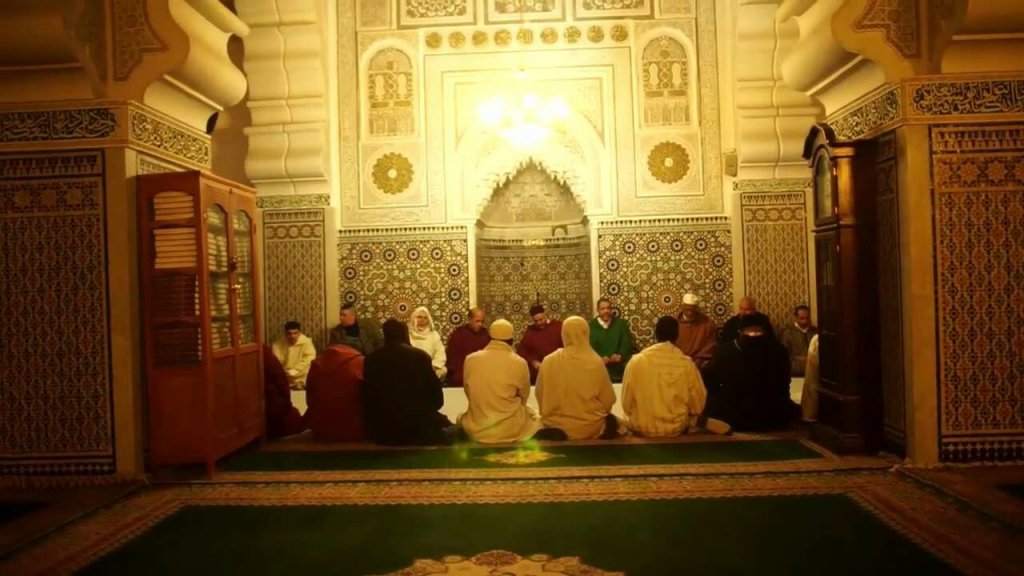
Established in Fes, the Shaykh’s following continued to grow, prompting him in 1215 (1800), by order of the Prophet, to begin construction of the Tijani zawiya that still serves as a place of congregation for the order to this day. The construction of this fabulous specimen of Moroccan artistry was financed by Tijani’s followers as well as from his own funds. Shaykh Ahmad Tijani passed from this world in 1230 (1815) at the age of eighty. He left behind him a firmly established order, the Tariqa Muhammadiyya emphasis of which inspired many of his later followers to renew and spread Islam in diverse communities far from the mother zawiya in Fes. Shaykh Ahmad Tijani was buried in his zawiya in Fes, which today remains a center of congregation for Tijanis around the world.
Bangalore, India Maxwell will have to work to get back into Australia’s one-day squad despite his brilliant domestic form, said captain Aaron Finch, who rates the all-rounder outside the nation’s current top batsmen. The 31-year-old Maxwell was dropped from Australia’s ODI tour of India after taking a break to focus on his mental health, one of eight players axed from the squad that lost the World Cup semi-final to England last year. “Outside the top seven at the moment,” Finch said when asked to rate Maxwell after his Australia’s 2-1 series defeat to India in Bangalore on Sunday. But Finch said the big-hitting batsman, who has scored 341 runs at an amazing average of 68.20 for the Melbourne Stars in this season’s Twenty20 Big Bash League, could still earn a recall. “Anyone can,” said Finch. “It’s about form, picking players for the right role. I think it’s just going to come down to whichever way you want to match up, specific roles for specific players.” India captain Virat Kohli was surprised at Maxwell’s absence from the Australia team, which he believed would have benefited from his off-spin bowling. “Honestly I did not look at the (squad) and I asked Aaron that have you got only 14… and asked ‘Is Maxwell here?’ and they said he is playing the BBL,” said Kohli.
شہباز اسلم نے کہا کہ موجودہ حکومت اب تک گیس کی قیمتوں میں333فیصد تک اضافہ کرچکی ہے اور موجودہ حکومت نے گیس مہنگی کرکے عوام پر پہلے ہی 194ارب کا بوجھ ڈال چکی ہے جس میں زیادہ بوجھ صنعتی شعبہ پر پڑا جس سے اس کی پیداواری لاگت میں اضافہ اور اشیاء مہنگی ہونے سے ملک میں ہوشربا مہنگائی کا طوفان آیا ہوا ہے۔ گیس کی قیمتوں میں اضافہ سے عوام کے علاوہ صنعتی شعبہ پر زیادہ بوجھ پڑے گا پیداوار مہنگی اور اشیاء مہنگی ہونے سے اس کا اثر برآمدات کی کمی کی صورت میں نکلے گا اس لیے حکومت گیس کی قیمتوں میں مجوزہ اضافہ کو مسترد کرے اور گیس مہنگی کرنے کی بجائے اس کی چوری روکے تاکہ گیس کمپنیوں کے خسارہ میں کمی آسکے انہوںنے کہا کہ گیس پاکستان کے قدرتی وسائل سے حاصل ہورہی ہے اس لیے اس کی قیمتوں میں اضافہ بلاجواز ہوگا۔
این این آئی۔ 21 جنوری2020ء) تاجر رہنما و ممبر لاہور چیمبرز آف کامرس وانڈسٹری سابق وائس چیئرمین فرایا شہباز اسلم نے کہا ہے کہ پٹرولیم ڈویژ ن کی طرف سے گیس کی قیمتوں میں 15فیصد اضافہ کی سمری اقتصادی رابطہ کمیٹی کو بھیجنے پر تشویش ہے سمری کے مطابق صنعتی شعبہ کیلئے گیس کی نرخوں میں12فیصد تک اضافہ ہوگا ۔ان خیالات کا اظہار انہوںنے فائونڈ ر چیئرمین عدنان بٹ،ارشد بیگ،تنویر احمد،حقیق احمد،شاہد بیگ اور دیگر صنعتکاروں کے وفد سے گفتگو کرتے ہوئے کیا۔ انہوںنے کہا کہ بجلی اور مہنگی گیس کے باعث پہلے ہی صنعتی شعبہ متاثر ہورہا ہے اور صنعتی شعبہ کی پیداواری لاگت میں اضافہ سے اشیاء مہنگی اور ہوشربا مہنگائی کا سیلاب آیا ہوا ہے جس سے ہر طبقہ فکر متاثر ہورہا ہے
اداکارہ علیزے شاہ نے اپنے دوست کو سوشل میڈیا پر ‘پرپوز’ کر دیا۔ , علیزے شاہ نے نعمان سمیع کے ساتھ اپنی تصاویر شیئر کیں اور انہوں نے اپنے دوست سے سوال پوچھا کہ کیا تم چاند کی چاندنی میں میرے ساتھ رہو گے ؟ ۔ , علیزے شاہ کے پرپوزل کے جواب میں نعمان سمیع نے فوری ہاں کر دی۔ نعمان سمیع نے لکھا کہ ہاں ہر طرح کی روشنی اور اندھیرے میں تمہارے ساتھ رہوں گا، تم ہر وقت اتنی شاندار کیسے بن جاتی ہو، اگر تم ساتھ ہو تو یہ زمین ہی جنت ہے ۔ ذرائع کے مطابق دونوں جلد باقاعدہ منگنی کرلیں گے۔
پاکستان کی معروف خاتون کرکٹ اینکر زینب عباس شادی کے بندھن میں بندھ گئیں۔ رواں سال کرکٹرز عماد وسیم اور حسن علی کے بعد اب معروف کرکٹ اینکر زینب عباس بھی شادی کے بندھن میں بندھ گئیں۔
پورٹس صحافی کی حمزہ کاردار کے ساتھ نکاح کی تقریب لاہور میں منعقد ہوئی جس میں قریبی رشتے داروں اور دوستوں نے شرکت کی۔
ان کی شادی کی ٹصاویر سوشل میڈیا پر وائرل ہو گئیں جس میں مداحوں نے عروسی جوڑے میں ملبوس زینب عباس کی خوب تعریف کرتے ہوئے انہیں شادی کی مبارکباد پیش کی۔










 BTV
BTV 